
Contraception Options: A Factual Overview of Available Methods

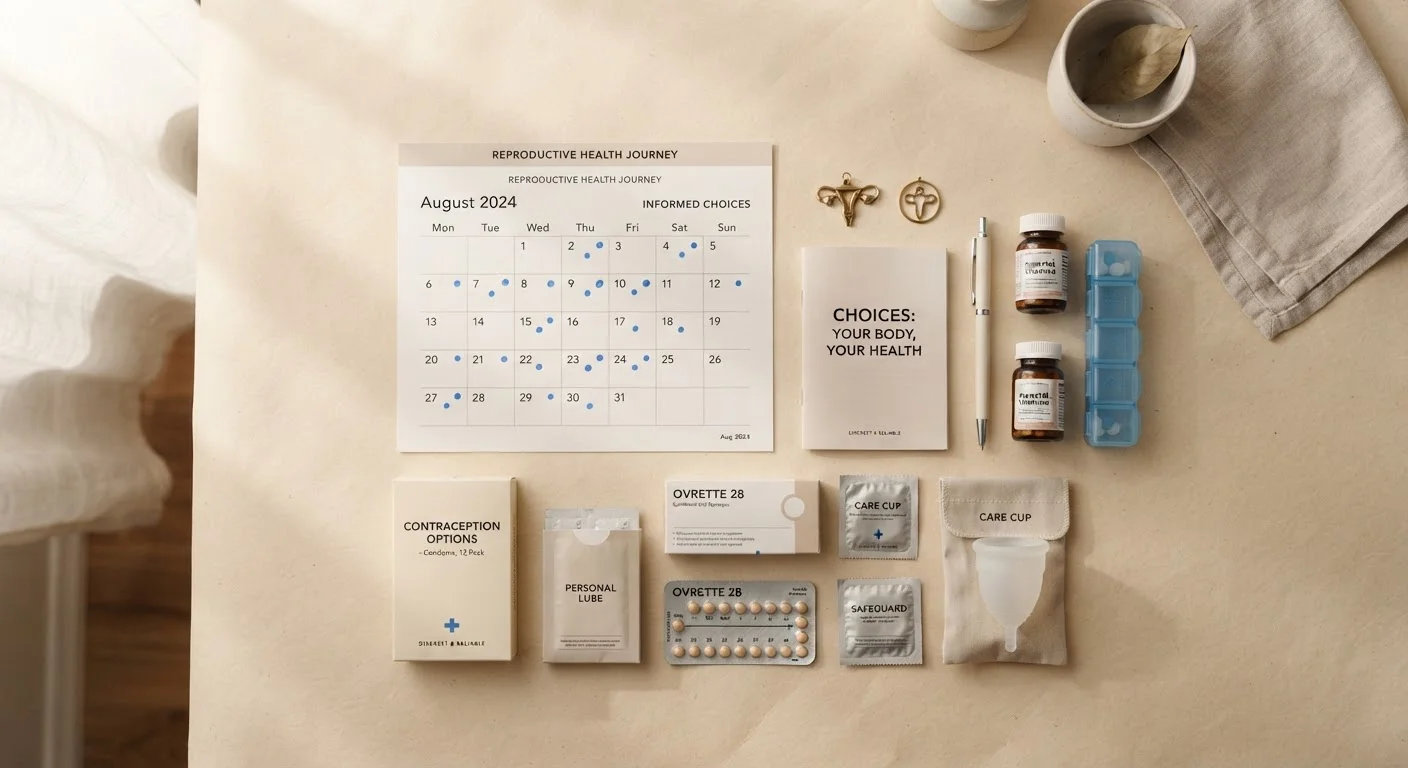
Photo: FeaturingHealth.net | Healthy Living Simplified editorial
Why Understanding Contraception Matters
Contraception — the deliberate prevention of pregnancy — encompasses a wide range of methods, each with distinct mechanisms, effectiveness rates, and suitability profiles. Having accurate, accessible information helps individuals engage in more productive conversations with their healthcare providers and make choices aligned with their health, lifestyle, and reproductive goals.
This article is general health education, not medical advice. Always consult a qualified healthcare professional before starting, stopping, or changing any contraceptive method.
| Most effective reversible methods | IUDs and subdermal implant (<1% failure rate) (CDC Contraceptive Effectiveness Data) |
| Only method preventing STIs | External and internal condoms (WHO, 2023) |
| Hormonal method types | Pills, patches, rings, injections, hormonal IUDs, implants |
| Hormone-free options | Copper IUD, condoms, diaphragm, FAMs |
| Copper IUD duration | Up to 10–12 years (FDA-approved labeling data) |
Hormonal Methods: How They Work
Hormonal contraceptives use synthetic versions of estrogen, progestin, or both to prevent ovulation, alter cervical mucus, or affect the uterine lining. They are among the most widely studied forms of contraception available.
- Combined oral contraceptives (COCs): Contain both estrogen and progestin. Taken daily, they primarily suppress ovulation. When used consistently and correctly, they are highly effective.
- Progestin-only pills (minipills): Suitable for those who cannot use estrogen — including some people who are breastfeeding or have certain cardiovascular risk factors — these work mainly by thickening cervical mucus.
- Hormonal patches and vaginal rings: Deliver hormones transdermally or vaginally on a weekly or monthly schedule, offering an alternative for those who prefer not to take a daily pill.
- Injectable contraceptives: A progestin injection administered by a clinician every one to three months, depending on formulation.
- Hormonal IUDs: Small T-shaped devices inserted into the uterus that release a low, localized dose of progestin for three to eight years, depending on type.
For a deeper background on how hormones interact with reproductive physiology, see our hormonal health introduction.
Ovulation suppression
The mechanism by which most combined hormonal contraceptives prevent the ovary from releasing an egg. Without ovulation, fertilization cannot occur.
Progestin
A synthetic hormone that mimics natural progesterone. Used in many contraceptive formulations to suppress ovulation, thicken cervical mucus, or thin the uterine lining.
Intrauterine device (IUD)
A small, T-shaped device inserted into the uterus by a clinician. Available in hormonal (progestin-releasing) and non-hormonal (copper) forms.
Long-acting reversible contraceptive (LARC)
A category of highly effective contraceptive methods — including IUDs and the subdermal implant — that provide protection for several years but can be removed to restore fertility.
Cervical mucus
Fluid produced by the cervix whose consistency changes across the menstrual cycle. Some contraceptives thicken it to form a barrier that impedes sperm movement.
Barrier and Non-Hormonal Methods
Barrier methods physically prevent sperm from reaching an egg. They are hormone-free, making them appropriate for individuals who prefer to avoid systemic hormonal effects.
- External (male) condoms: The only contraceptive method that also provides meaningful protection against sexually transmitted infections (STIs). For a broader discussion of STI prevention, see safe sex practices for partners.
- Internal (female) condoms: Inserted into the vagina before intercourse; also offer some STI protection.
- Diaphragm and cervical cap: Silicone devices inserted before sex to cover the cervix, typically used with spermicide for added effectiveness.
- Copper IUD: A hormone-free intrauterine device effective for up to 10–12 years. The copper ions create an environment that is toxic to sperm. It can also be used as emergency contraception when inserted within a specific window after unprotected intercourse — a clinician should be contacted immediately for guidance.
- Spermicide: Chemical agents that impair sperm motility; most effective when combined with another method.
Emergency Contraception: A Separate Category
Long-Acting Reversible Contraceptives (LARCs) and Permanent Options
LARCs — including both hormonal and copper IUDs and the subdermal implant — are among the most effective reversible methods available, with failure rates below 1% in typical use. Their main advantage is that they require no daily or per-encounter action once placed by a clinician.
The subdermal implant is a thin, flexible rod inserted under the skin of the upper arm that releases progestin for up to three years.
For those who have completed their families or are certain they do not want future pregnancies, permanent methods such as tubal ligation (in people with fallopian tubes) or vasectomy (in people with testes) are surgical options. These are considered irreversible, and decisions should be made carefully with a healthcare provider.
Fertility awareness-based methods (FAMs) represent a non-hormonal, non-device approach. Their effectiveness depends heavily on consistent, correct use and individual cycle regularity. The science behind cycle tracking offers a research-grounded look at how FAMs work and their evidence-based limitations.
This article is for general informational purposes only and does not constitute medical advice. Consult a licensed healthcare professional for guidance tailored to your individual health needs and circumstances.
The content on this site is for informational purposes only and is not a substitute for professional advice. Always consult a qualified professional for guidance specific to your situation.