
Lifting Weights Won't Make You Bulky — and Other Fitness Myths Women Should Know

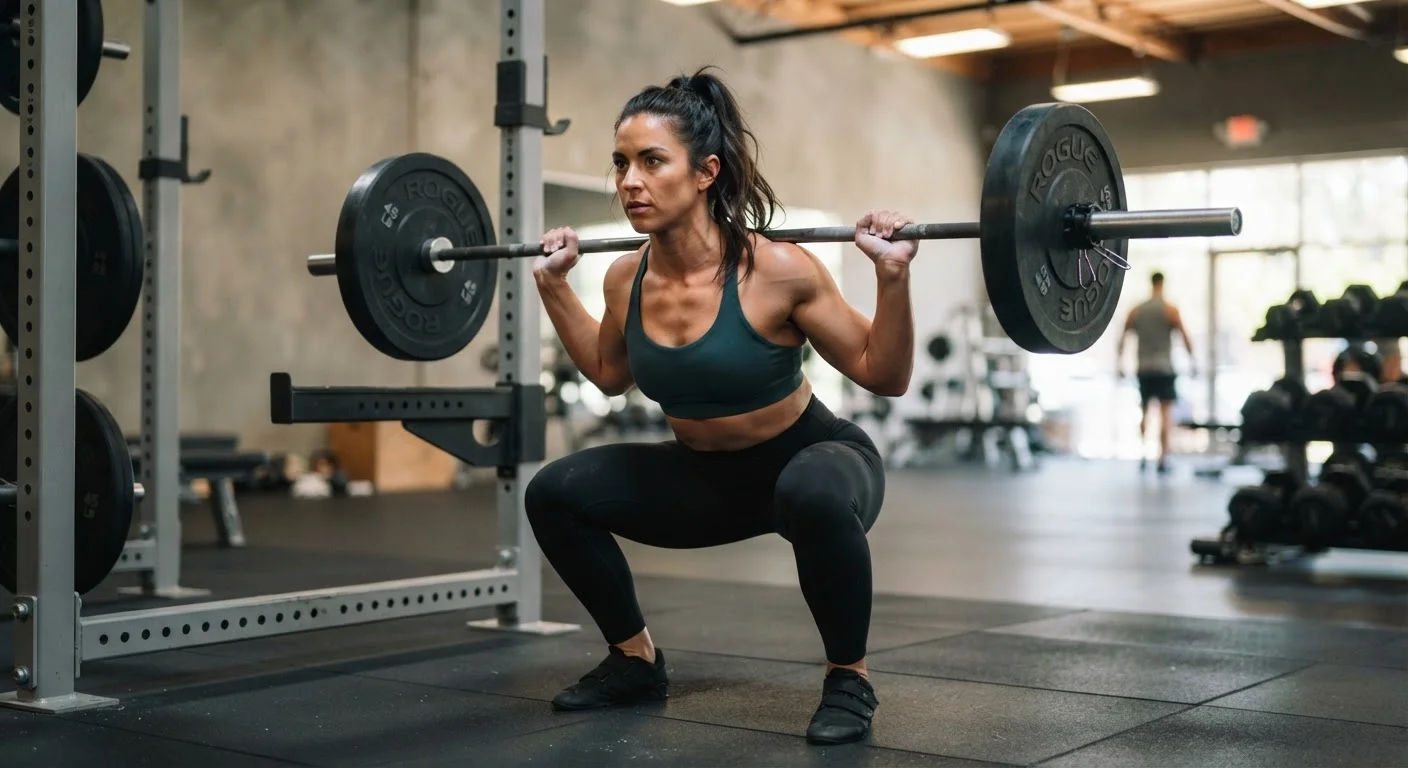
Photo: FeaturingHealth.net | Healthy Living Simplified editorial
Key Takeaways
- Women lack the testosterone levels required to build the bulk commonly associated with male bodybuilders.
- Spot reduction — losing fat from one specific area through targeted exercise — is not supported by science.
- Cardio alone is not the most effective strategy for long-term fat loss or metabolic health in women.
- Lifting heavier weights builds functional strength and bone density without necessarily increasing muscle size dramatically.
- Rest and recovery are essential components of a fitness plan, not signs of insufficient effort.
Why Fitness Myths Persist — and Why They Matter
Misinformation about women's fitness is remarkably durable. It circulates through social media, gym culture, and even well-meaning advice from friends — and it consistently steers women away from training approaches that could genuinely benefit their health. Understanding what the evidence actually says helps cut through the noise and make more informed choices about exercise.
The myths below aren't harmless. They cause women to avoid strength training, over-rely on cardio, or feel frustrated when results don't match unrealistic expectations. Correcting them isn't just an academic exercise — it has real implications for long-term health, including bone density, metabolic function, and cardiovascular wellness.
Myth
Lifting weights will make women look bulky and masculine.
Fact
Women's hormonal profiles — specifically much lower testosterone levels compared to men — make dramatic muscle bulk extremely unlikely without specialized, high-volume training regimens.
This is one of the most pervasive myths in women's fitness, and it keeps many women from one of the most beneficial forms of exercise available to them. Testosterone is the primary hormonal driver of significant muscle hypertrophy. Women produce roughly 15 to 20 times less testosterone than men on average, which means the physiological pathway to large muscle mass is far more constrained.
What resistance training does produce in women is lean muscle tone, improved strength, better posture, and enhanced metabolic function. The professional female athletes who appear highly muscular have typically trained for years at extreme volume and intensity, often with nutritional strategies specifically designed to support that goal.
Myth
You can target fat loss in a specific body area by exercising that area — so crunches burn belly fat.
Fact
Spot reduction is not physiologically possible. Fat loss occurs systemically across the body, driven by overall energy balance and hormonal signals — not by which muscles you contract.
The idea that abdominal exercises reduce abdominal fat is intuitive but incorrect. When the body mobilizes stored fat for energy, it draws from fat stores throughout the body according to genetic, hormonal, and metabolic factors — not the muscles being worked at that moment.
Crunches and similar exercises do strengthen the underlying abdominal muscles, which has real functional benefits. But the fat layer above those muscles is not preferentially reduced by targeting them. Compound movements that engage large muscle groups and support overall energy expenditure are generally more effective for body composition change.
Myth
Cardio is the best exercise for weight loss, so women should prioritize it over strength training.
Fact
While cardiovascular exercise offers important health benefits, resistance training supports long-term fat management more effectively by increasing lean muscle mass and resting metabolic rate.
Cardio burns calories during the session, which matters. But muscle tissue, built through resistance training, increases the number of calories the body burns at rest. Over weeks and months, this metabolic advantage compounds. Research suggests that combining both modalities — rather than choosing one — produces the most favorable outcomes for body composition and cardiovascular health.
Over-reliance on cardio without resistance training can also result in the loss of muscle tissue alongside fat, particularly in a caloric deficit. Preserving and building muscle is especially important for women as they age, given age-related muscle loss (sarcopenia) and its downstream effects on mobility and metabolic health.
Myth
If you stop working out, your muscle turns into fat.
Fact
Muscle and fat are distinct tissue types and cannot convert into each other. When training stops, muscle may atrophy (shrink), and if caloric intake doesn't adjust, fat mass may increase separately.
This myth likely originates from observing that some athletes gain fat after retiring from sport — but the two processes are independent. Muscle tissue that is no longer stimulated through resistance training will gradually decrease in size and strength through a process called atrophy. Simultaneously, if dietary habits remain unchanged while activity drops, the reduced caloric expenditure can lead to fat accumulation.
The practical takeaway is that maintaining some level of physical activity and being mindful of nutritional habits during periods of reduced training can preserve body composition reasonably well. The transition need not be all-or-nothing.
Myth
Women should avoid heavy weights and stick to light weights with high repetitions to 'tone' without building muscle.
Fact
Muscle 'tone' results from building muscle and reducing fat — both of which are better supported by progressive resistance training, including heavier loads, than by exclusively light-weight, high-rep protocols.
The concept of 'toning' is not a distinct physiological process. What people describe as a toned appearance reflects visible muscle definition, which requires sufficient muscle mass and a body composition that allows that muscle to show. Light weights with very high repetitions can be one form of training stimulus, but they are generally not optimal for building the muscle mass needed to create that effect.
Progressive overload — gradually increasing the resistance or difficulty of training over time — is a core principle of effective strength training. This does not require lifting maximum loads; it means consistently challenging the muscles enough to prompt adaptation. Heavier loads within a moderate repetition range (such as 6–12 reps) are well-supported by exercise science for this purpose.
What the Evidence Actually Supports
A well-rounded fitness routine for women typically combines resistance training, cardiovascular movement, and adequate recovery. Research consistently shows that muscle tissue is metabolically active, meaning it contributes to the body's baseline energy expenditure — a key factor in maintaining a healthy weight over time.
Bone health is another compelling reason to prioritize strength training. Women face a higher lifetime risk of osteoporosis than men, and weight-bearing exercise is one of the few modifiable factors that supports bone mineral density. This benefit is relevant at every age, not just post-menopause.
~20x
Lower testosterone in women vs. men
According to established endocrinology research, women produce approximately 15–20 times less testosterone than men, a key reason dramatic muscle bulk is physiologically unlikely for most women.
1 in 2
Women over 50 affected by osteoporosis-related fracture
The National Osteoporosis Foundation estimates that one in two women over age 50 will experience an osteoporosis-related fracture in her lifetime, underscoring the importance of bone-strengthening exercise.
3–8%
Muscle mass lost per decade after age 30
Research published in sports medicine literature indicates adults lose roughly 3–8% of muscle mass per decade beginning around age 30, with the rate accelerating after 60.
Recovery, often treated as optional, is where physical adaptation actually occurs. Without adequate rest, the stimulus from training cannot translate into improved strength, endurance, or body composition. Learn more about how rest fits into the bigger picture in our guide on what women often get wrong about rest days.
This article is for general informational and educational purposes only and is not a substitute for professional medical or fitness advice. Consult a qualified healthcare provider before beginning any new exercise program, especially if you have an existing health condition.
The content on this site is for informational purposes only and is not a substitute for professional advice. Always consult a qualified professional for guidance specific to your situation.