
Preventive Habits for People Who Work Desk Jobs

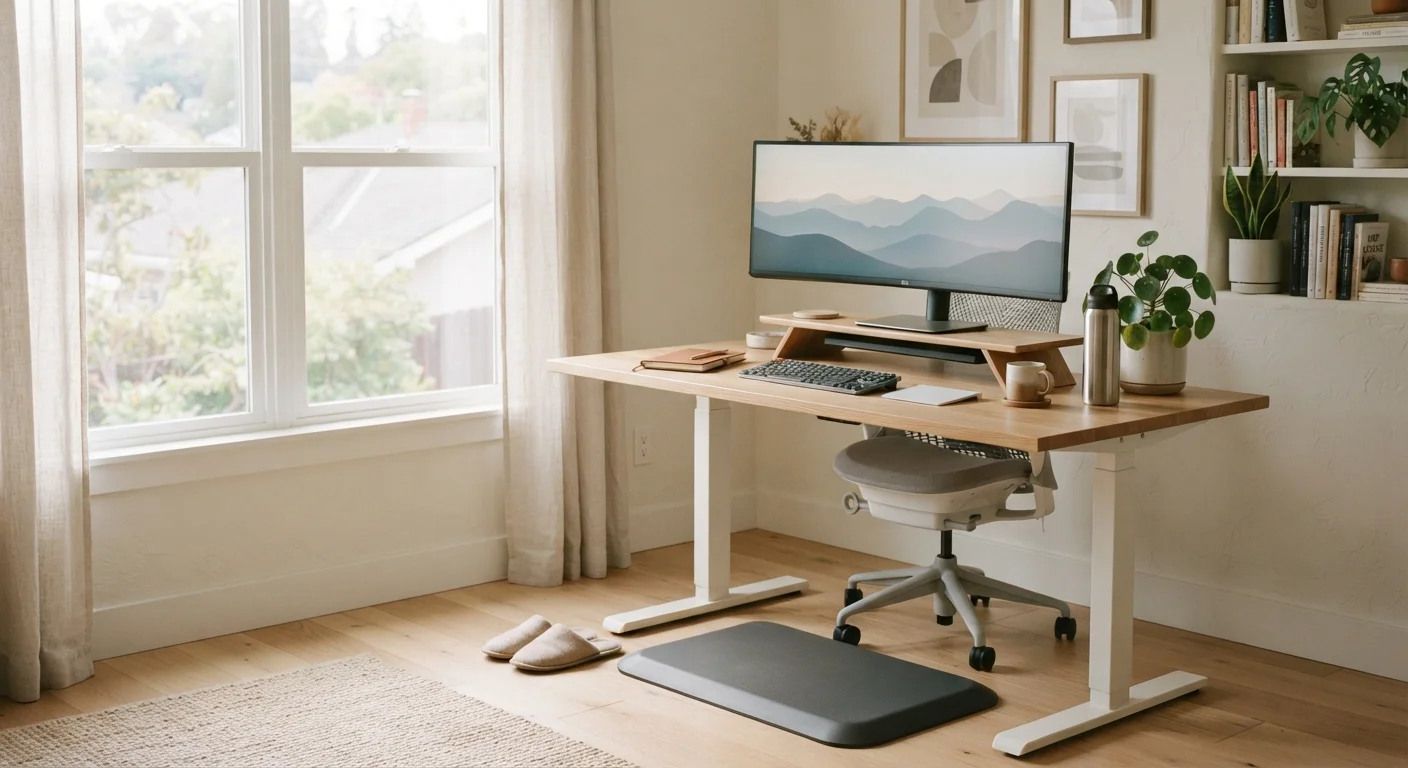
Photo: FeaturingHealth.net | Healthy Living Simplified editorial
Key Takeaways
- Prolonged sitting raises cardiovascular and metabolic disease risk even in otherwise active people.
- Breaking up sedentary time with brief movement every 30–60 minutes is evidence-supported.
- Posture, hydration, eye strain, and sleep habits each carry independent preventive value.
- Consistency across small behaviors matters more than occasional intensive efforts.
- Routine health screenings remain essential regardless of lifestyle adjustments.
Why Desk Work Carries Distinct Health Risks
Sedentary occupations have expanded significantly over recent decades, and research has consistently linked prolonged sitting to elevated risk of cardiovascular disease, type 2 diabetes, and all-cause mortality — independent of whether someone meets general physical activity guidelines. The mechanism involves reduced muscle activation, lower energy expenditure, and disrupted glucose and lipid metabolism during extended stillness.
This does not mean desk work is inevitably harmful, but it does mean passive work environments require deliberate countermeasures. The habits covered in this guide are informed by public health evidence and clinical guidance from organizations including the CDC and USPSTF. They are designed to be integrated into a standard workday without requiring a career change or gym membership.
For a broader look at how daily behaviors accumulate into meaningful protection, see the daily habits linked to lower chronic disease risk.
This Is General Information, Not Medical Advice
What You'll Need Before You Start
Most of these habits require minimal equipment. The list below identifies what is helpful to have in place before working through the steps. Optional items can improve outcomes but are not prerequisites for meaningful change.
What you will need
Adjustable standing desk or desk riser
Allows alternating between sitting and standing positions throughout the workday to reduce continuous sedentary time.
Lumbar support cushion or ergonomic chair
Supports the natural curve of the lower spine and reduces musculoskeletal strain during prolonged sitting.
Reusable water bottle (at least 20 oz)
Keeps hydration visible and accessible, serving as a passive reminder to drink consistently through the day.
Interval timer or phone reminder app
Prompts regular movement breaks and eye-rest intervals without relying on willpower alone.
External monitor at eye level
Reduces neck flexion and eye strain compared with looking down at a laptop screen for hours.
Step-by-Step: Building Your Desk-Worker Prevention Routine
The following steps are ordered to build a sustainable routine progressively — starting with awareness, then environment, then behavior. Each step is independent; you do not need to implement all of them simultaneously. Gradual adoption tends to produce more durable habits than trying to overhaul everything at once.
Sedentary Time and Exercise Are Not Interchangeable
Audit your current sitting pattern
Before changing anything, get an honest picture of how much uninterrupted sitting your workday actually involves. Use your phone's screen time tools, a simple notepad log, or a wearable to track how many minutes pass between standing. Most desk workers are surprised to find gaps of two hours or more are common.
Schedule structured movement breaks
Set a timer or calendar block to stand and move for two to five minutes every 30 to 60 minutes. The movement does not need to be vigorous — walking to refill water, doing shoulder rolls, or standing during a phone call all count. The goal is interrupting the physiological effects of continuous sitting, not hitting an intensity threshold.
Optimize your workstation ergonomics
Adjust your monitor so the top of the screen sits at or slightly below eye level. Keep your keyboard at a height where your elbows rest at roughly 90 degrees. If you use a laptop as your primary screen, an external monitor or laptop stand paired with a separate keyboard is strongly preferable for neck and shoulder health over the long term.
Apply the 20-20-20 rule for eye health
Every 20 minutes, look at something approximately 20 feet away for at least 20 seconds. This practice, widely recommended by optometrists, helps reduce digital eye strain — characterized by dry eyes, blurred vision, and headaches — that accumulates from sustained near-focus screen work. Combine this with reducing screen glare and ensuring ambient lighting is adequate.
Prioritize consistent hydration
Keep a water bottle at your desk within arm's reach. Mild dehydration — levels well below what produces thirst in many adults — is associated with reduced concentration and increased fatigue. Adequate hydration also supports kidney function and can reduce the likelihood of developing kidney stones, a risk that increases with sedentary behavior and low fluid intake.
Protect sleep by managing evening screen exposure
After-hours work emails and late screen use can delay sleep onset by suppressing melatonin production. Setting a consistent screen-off boundary 30 to 60 minutes before your target bedtime, and keeping a regular sleep-wake schedule, supports the restorative sleep that is essential to metabolic and cardiovascular health — both of which are already under pressure from daytime sedentary work.
Stay current with preventive screenings
Behavioral habits are one layer of prevention; clinical screenings are another. Desk workers, especially those over 40 or with family history of cardiometabolic conditions, should maintain recommended schedules for blood pressure, blood glucose, cholesterol, and body-weight assessments. Building a sustainable screening habit can help you stay consistent without relying on memory alone.
Stack Habits onto Existing Cues
Making These Habits Stick Over Time
The challenge with preventive habits is that their benefits are invisible in the short term. There is no immediate feedback when you take a movement break or go to sleep on time — the payoff accumulates quietly over months and years. This is precisely why structure matters more than motivation. Preventive habits compound meaningfully over decades, and the earlier a consistent pattern is established, the greater the cumulative benefit.
Consider anchoring these behaviors to your daily routines — mornings, lunch breaks, and end-of-workday transitions are natural enforcement points. A structured morning routine can set a physical and mental baseline that carries forward into how you manage your desk hours.
This article is for general informational and educational purposes only and does not constitute medical advice. Always consult a qualified healthcare professional for guidance specific to your health situation.
The content on this site is for informational purposes only and is not a substitute for professional advice. Always consult a qualified professional for guidance specific to your situation.