
Hydration Habits: What Good Daily Fluid Intake Actually Looks Like

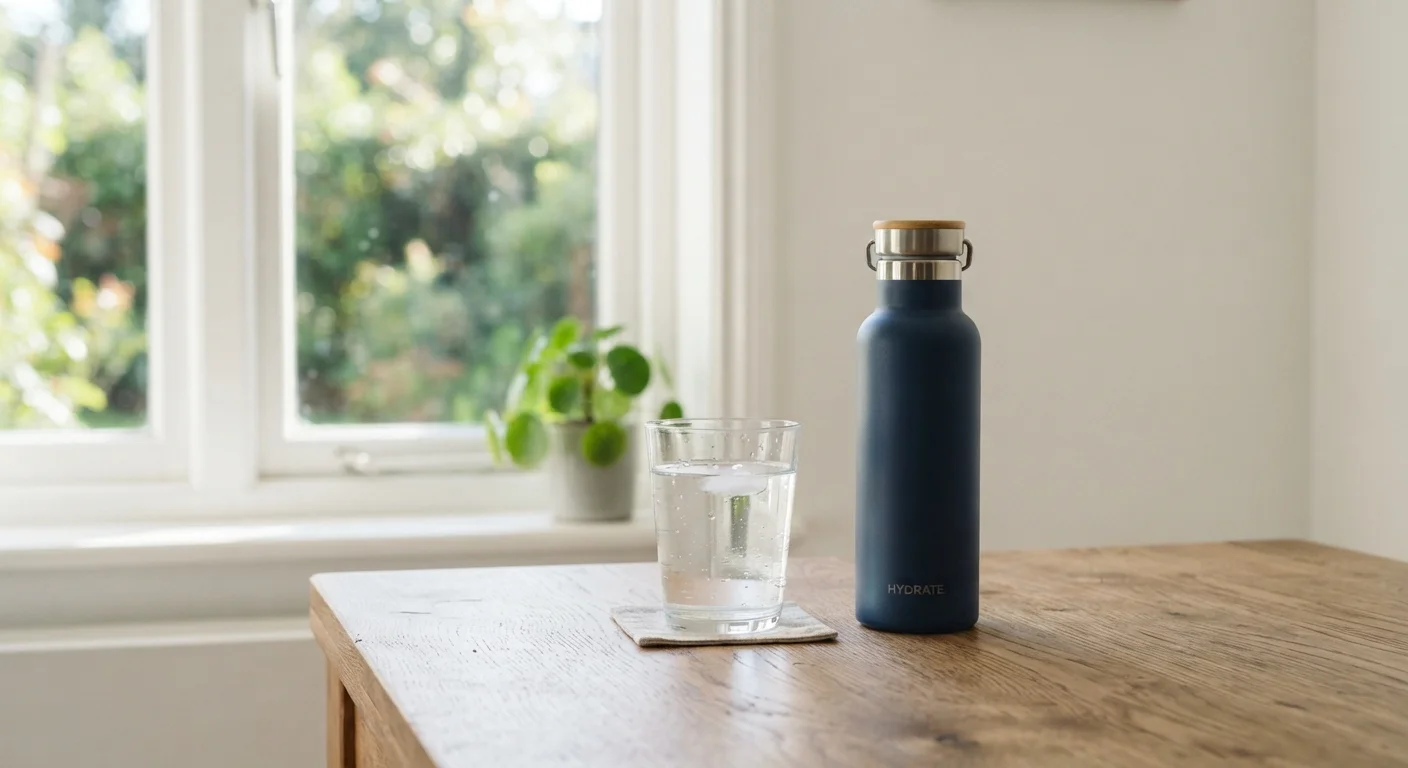
Photo: FeaturingHealth.net | Healthy Living Simplified editorial
Key Takeaways
- Total daily fluid needs vary by body size, activity level, climate, and health status.
- Most healthy adults can rely on thirst and urine color as reliable hydration guides.
- Plain water, low-fat milk, and unsweetened beverages all count toward daily fluid intake.
- Chronic mild dehydration is linked to higher risk of kidney stones, UTIs, and cognitive fatigue.
- Specific medical conditions require individualized fluid guidance from a healthcare provider.
Why Hydration Deserves More Than a Meme
Few health topics attract as much confident misinformation as daily hydration. The oft-repeated rule that everyone must drink eight 8-ounce glasses of water per day has no firm basis in clinical evidence, yet it persists. Meanwhile, people with genuine hydration questions — how much is enough, what counts, and when to worry — struggle to find grounded answers.
The reality is that adequate hydration is achievable for most people through modest, consistent habits. It's also one of the everyday behaviors most directly linked to long-term health outcomes. As explored in our broader look at daily habits tied to lower chronic disease risk, what you do repeatedly matters far more than any single optimal number.
~75%
Americans potentially mildly underhydrated
A commonly cited analysis by researchers at Weill Cornell Medical College estimated that a significant majority of Americans may be chronically mildly underhydrated, though precise population-level data remains difficult to establish.
2x
Increased kidney stone risk with low fluid intake
The National Kidney Foundation notes that low daily fluid intake is one of the most consistently identified modifiable risk factors for kidney stone formation.
What the Evidence Actually Says About Daily Fluid Needs
The National Academies of Sciences, Engineering, and Medicine provides the most widely cited reference ranges: approximately 3.7 liters (125 oz) of total water per day for adult men and 2.7 liters (91 oz) for adult women — from all sources combined, including food. Roughly 20% of daily water intake typically comes from food alone.
These figures represent averages for sedentary adults in temperate climates. Exercise, heat, illness, pregnancy, and breastfeeding all meaningfully increase fluid requirements. Age also matters: older adults experience a blunted thirst response and may need to be more intentional about fluid intake.
Special Populations Need Tailored Guidance
The practical upshot is that no single number applies universally. Individual needs are dynamic, not fixed.
Best Practices for Consistent Daily Hydration
Building reliable hydration habits is less about counting ounces and more about integrating smart behaviors throughout the day.
Use urine color as your primary hydration feedback tool.
Drink a glass of water at consistent anchor points throughout the day.
Count all non-alcoholic, non-caffeinated beverages and water-rich foods toward your total.
Increase fluid intake proactively on hot days and during physical activity.
Moderate alcohol and high-caffeine intake, which have diuretic effects.
Quick Starts: Act on This Today
If you're unsure where your current habits stand, these simple steps can help you calibrate quickly — no tracking app or measuring cup required.
This article is for general informational purposes only and does not constitute medical advice. If you have a health condition affecting fluid balance — including kidney disease, heart failure, or diabetes — consult your healthcare provider for personalized guidance.
The content on this site is for informational purposes only and is not a substitute for professional advice. Always consult a qualified professional for guidance specific to your situation.