
Common Myths About Vitamin C That Nutrition Science Has Largely Moved Past

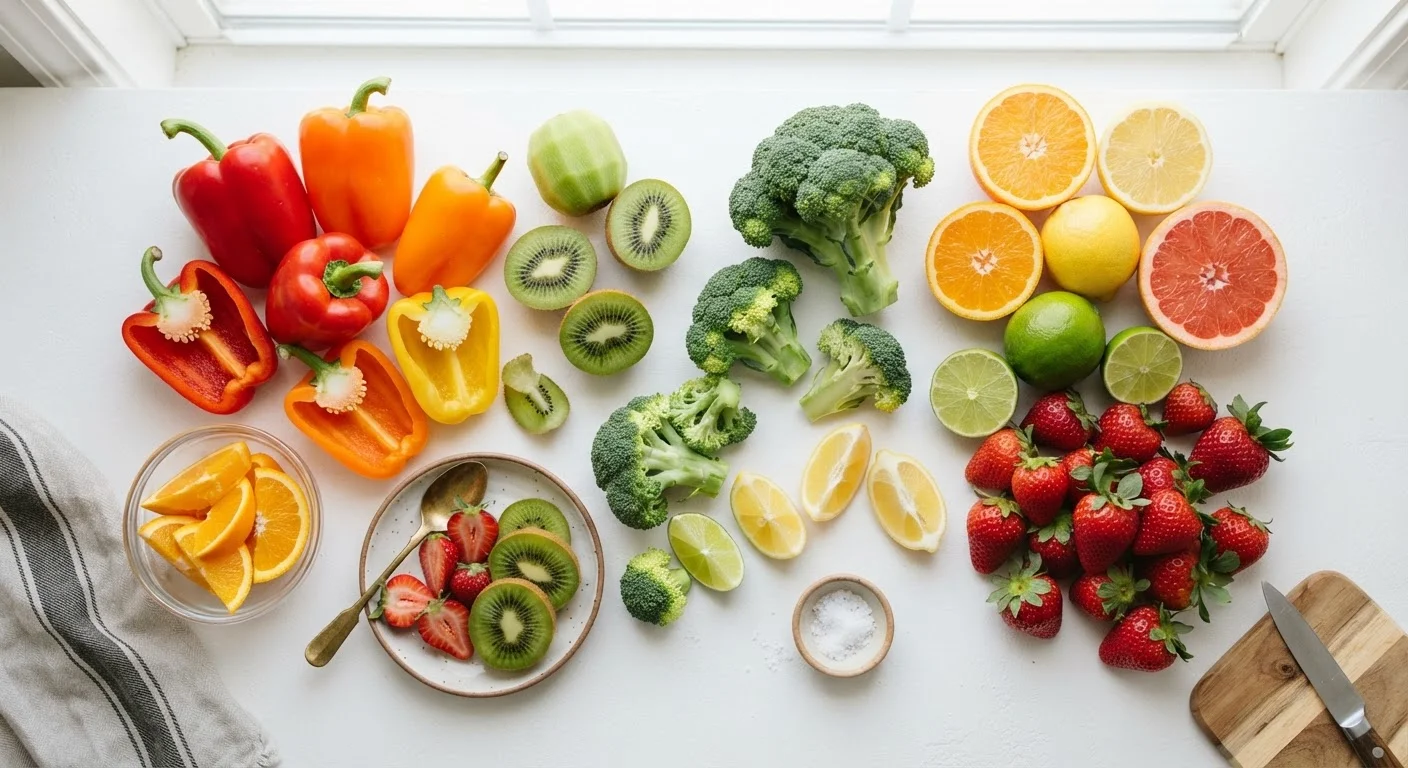
Photo: FeaturingHealth.net | Healthy Living Simplified editorial
Key Takeaways
- Megadosing vitamin C does not reliably prevent or cure the common cold.
- Oranges are not the best food source of vitamin C — bell peppers and kiwi rank higher.
- The body excretes excess vitamin C rather than storing it, making very high doses wasteful.
- Most non-smoking American adults can meet their vitamin C needs through a varied diet.
- Supplements can fill genuine gaps, but they don't replicate all benefits of whole food sources.
Why Vitamin C Myths Have Proven So Stubborn
Vitamin C — chemically known as ascorbic acid — is one of the most discussed nutrients in popular health culture. It has been credited with curing colds, extending lifespan, and acting as a near-universal remedy. That reputation owes a great deal to Nobel laureate Linus Pauling, who in the 1970s promoted enormous daily doses as a path to better health. While Pauling's scientific contributions in chemistry were genuine, his vitamin C claims went well beyond what the evidence supported — and they shaped public belief for decades.
Today, nutrition science has refined its understanding considerably. The myths that grew out of that era aren't always harmful, but they do lead people to waste money on unnecessary supplements, overlook better dietary sources, or mismanage their expectations during illness. What follows examines the most persistent misconceptions and what research actually shows.
For a broader look at how popular health beliefs can drift from evidence, see our article on preventive health misconceptions.
The Myths — and What the Evidence Actually Shows
Each of the following pairs a widely held belief with the current scientific consensus. Understanding these distinctions can help you make smarter, food-first choices about vitamin C without overspending on supplements or falling for oversimplified claims.
Myth
Taking large doses of vitamin C will prevent you from catching a cold.
Fact
Evidence does not support megadosing as a reliable cold prevention strategy for most people.
A widely cited Cochrane review analyzing dozens of trials found that regular high-dose supplementation did not reduce cold incidence in the general population. It showed a modest reduction in cold duration — roughly 8% in adults — but this is a far cry from prevention. The exception is people under intense physical stress, such as marathon runners or soldiers in extreme conditions, where supplementation showed a more meaningful benefit. For the average adult, megadosing doesn't replicate that effect.
Myth
Oranges are the richest dietary source of vitamin C.
Fact
Several common foods — especially red bell peppers and kiwi — contain significantly more vitamin C than oranges.
Oranges have become the cultural symbol of vitamin C, largely through decades of marketing. However, a single medium orange provides roughly 70 mg of vitamin C, while half a cup of raw red bell pepper delivers close to 95 mg. Kiwifruit, guava, broccoli, and strawberries are all competitive sources. Expanding your mental map of vitamin C foods leads to a more varied, nutrient-rich diet overall.
Myth
Your body stores extra vitamin C for when you need it, so more is always better.
Fact
Vitamin C is water-soluble and not stored in significant amounts; excess is excreted in urine.
Unlike fat-soluble vitamins such as A, D, E, and K — which accumulate in body tissues — vitamin C is water-soluble, meaning it dissolves in water and is eliminated through urine when intake exceeds what the body can use. The kidneys maintain tight control over plasma concentration. Once you exceed roughly 200 mg per day, intestinal absorption efficiency drops substantially. Doses above the tolerable upper intake level of 2,000 mg per day can cause gastrointestinal side effects including diarrhea and nausea, with no added health benefit.
Myth
Vitamin C supplements are equivalent to getting it from whole foods.
Fact
Supplements provide isolated ascorbic acid, but whole foods deliver fiber, phytonutrients, and cofactors that work together with vitamin C.
Ascorbic acid in supplement form is chemically identical to the vitamin C in food, and the body absorbs both. However, whole food sources come packaged with bioflavonoids, fiber, antioxidants, and other compounds that may interact synergistically with vitamin C in ways not fully replicated by isolated supplements. This doesn't make supplements useless — they fill genuine dietary gaps — but it supports the principle that food-first approaches offer broader nutritional benefit. Supplements are best viewed as a backup, not an upgrade.
Myth
Everyone in the U.S. is deficient in vitamin C and needs to supplement.
Fact
Clinical vitamin C deficiency (scurvy) is rare in the U.S.; most adults with reasonably varied diets meet their needs.
Scurvy — the severe deficiency disease characterized by fatigue, gum disease, and poor wound healing — is uncommon in developed countries and typically seen only in people with very restricted diets, malabsorption conditions, or severe food insecurity. National nutrition surveys consistently find that a majority of American adults consume adequate vitamin C. Certain groups face higher risk: people who smoke, those with limited access to fresh produce, and individuals with specific gastrointestinal conditions. For everyone else, a diet that includes a few servings of fruits and vegetables daily generally meets the RDA without supplementation.
~8%
Cold duration reduction from regular vitamin C supplementation
A Cochrane meta-analysis of randomized controlled trials found this modest average reduction in adult cold duration, with no significant effect on cold prevention in the general population.
2,000 mg
Tolerable upper intake level for vitamin C (adults)
The National Institutes of Health Office of Dietary Supplements sets this as the daily upper limit above which gastrointestinal side effects become likely, with no demonstrated added benefit.
90 mg
Daily vitamin C RDA for adult men
According to USDA and NIH guidelines, this amount — easily met through a half-cup of red bell pepper — covers the needs of most healthy adult men.
Getting Enough Vitamin C From Food — A Practical Guide
The Recommended Dietary Allowance (RDA) for vitamin C is 90 mg per day for adult men and 75 mg per day for adult women, with an increase of 35 mg recommended for people who smoke, since smoking accelerates vitamin C breakdown. These amounts are readily achievable through a varied diet that includes fruits and vegetables most days.
Some particularly rich sources worth adding to your routine:
- Red bell peppers (raw, ½ cup): approximately 95 mg
- Kiwifruit (1 medium): approximately 64 mg
- Broccoli (cooked, ½ cup): approximately 51 mg
- Strawberries (½ cup): approximately 49 mg
- Orange juice (¾ cup): approximately 93 mg
Cooking does reduce vitamin C content — the nutrient is water-soluble and heat-sensitive — so including some raw sources alongside cooked vegetables helps preserve intake. Brief steaming is generally better than boiling for retention.
Certain Groups Need Extra Attention
If you are navigating broader questions about micronutrient balance or wondering how vitamin C fits alongside other nutrients, it's worth consulting a registered dietitian. As with other nutrients discussed in our macronutrient myths article, the goal is a well-rounded diet — not optimizing single nutrients in isolation.
This article is for general informational and educational purposes only and does not constitute medical advice. Consult a qualified healthcare professional before making changes to your diet or supplement routine.
The content on this site is for informational purposes only and is not a substitute for professional advice. Always consult a qualified professional for guidance specific to your situation.