
Simple Carbs vs. Complex Carbs: What the Difference Means on Your Plate

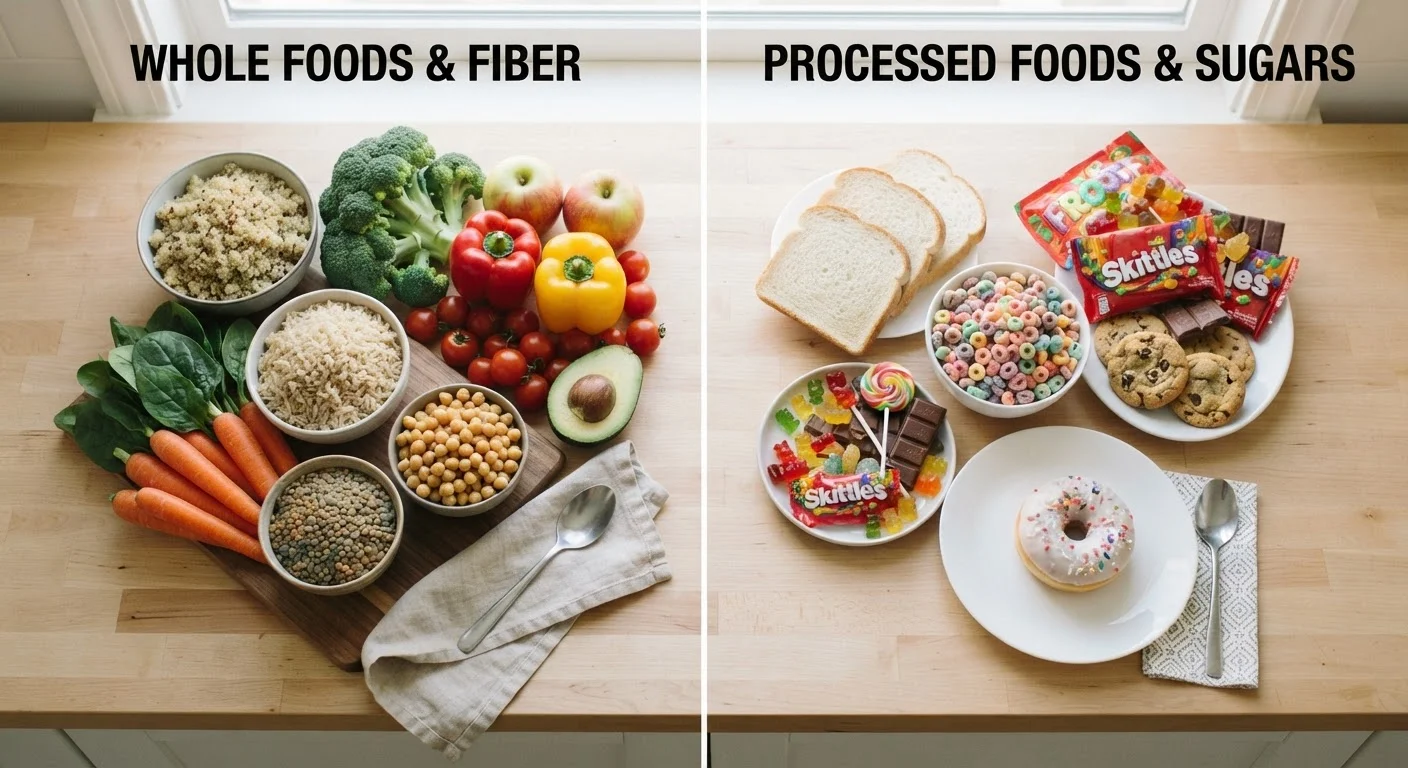
Photo: FeaturingHealth.net | Healthy Living Simplified editorial
Key Takeaways
- Simple carbs digest quickly and cause faster rises in blood glucose than complex carbs.
- Complex carbs contain longer sugar chains and are often rich in fiber, vitamins, and minerals.
- Whole food sources of simple carbs, like fruit, also provide fiber and nutrients that matter.
- Most Americans eat more refined simple carbs than dietary guidelines recommend.
- Choosing complex carbs at most meals supports steadier energy and overall dietary quality.
What Makes a Carbohydrate Simple or Complex
Carbohydrates are classified by the length and structure of their sugar chains. Understanding this distinction is a foundational step in making sense of everyday food choices. For a broader look at how carbs fit into your overall diet, see our guide to macronutrients.
Simple carbohydrates consist of one or two sugar molecules — chemically known as monosaccharides (like glucose and fructose) and disaccharides (like sucrose and lactose). Because the molecular structure is short, the digestive system breaks them down rapidly. They appear naturally in fruit, milk, and some vegetables, and are also the primary component of added sugars in candy, soda, white bread, and pastries.
Complex carbohydrates are made of three or more sugar molecules linked in longer chains, called polysaccharides. Starches and dietary fiber both fall into this category. Because the chains are longer, digestion takes more time, slowing the release of glucose into the bloodstream. Common sources include whole grains, legumes, potatoes, oats, and most non-starchy vegetables.
The key distinction is not just structure, but what comes with it: complex carb foods are frequently rich in fiber, B vitamins, and minerals, while heavily processed simple carb foods are often stripped of those extras.
How Each Type Behaves in Your Body
Digestion speed is where the practical difference between these two carb types becomes most apparent. Learn how carbohydrates are broken down and stored for a deeper look at this process.
| Criterion | Simple Carbohydrates | Complex Carbohydrates |
|---|---|---|
| Sugar chain length | 1–2 sugar molecules | 3+ sugar molecules (long chains) |
| Digestion speed | Fast | Slow to moderate |
| Blood glucose effect | Faster, higher rise | Slower, more gradual rise |
| Typical fiber content | Low (especially refined) | Higher in most whole sources |
| Common food sources | Fruit, milk, white bread, sugar | Oats, legumes, whole grains, starchy veg |
| Micronutrient density | Varies — low in refined foods | Generally higher per serving |
When you eat simple carbs — especially refined ones with little fiber — glucose enters your bloodstream relatively quickly. Your pancreas responds by releasing insulin to manage that glucose. A rapid rise can be followed by an equally rapid drop, which many people experience as renewed hunger or low energy shortly after eating.
Complex carbs behave differently. Their longer chains take more time to break apart, and the fiber many of them contain slows digestion further. The result is a more gradual release of glucose, which tends to support steadier energy levels over a longer period.
This does not mean all simple carbs are harmful. Whole fruit, for example, contains fructose — a simple sugar — but also provides fiber, water, and micronutrients that meaningfully change how it behaves in the body compared to a sugary drink with similar calorie content.
~57%
Share of US calories from refined carbs and added sugars
Research published in BMJ Open estimated that ultra-processed foods — heavily weighted toward refined carbohydrates — account for a significant majority of energy intake in the American diet.
28–34g
Daily fiber goal for most adults (USDA)
The Dietary Guidelines for Americans recommend 28g of fiber per day for women and 34g for men, amounts most Americans fall well short of on typical diets.
Making Practical Choices at Every Meal
Applying this knowledge at the grocery store or dinner table does not require counting grams or overhauling your entire diet. A few consistent habits can shift your carbohydrate quality meaningfully over time.
- Swap refined grains for whole grains. Choosing whole-wheat bread, brown rice, or oats over their white or refined counterparts preserves the fiber and nutrients that processing removes.
- Add legumes regularly. Beans, lentils, and chickpeas are among the most nutrient-dense complex carb sources available — high in fiber, protein, and minerals.
- Keep whole fruit in the picture. Fruit contains simple sugars, but its fiber and phytonutrient content make it a worthwhile part of a balanced diet, unlike fruit juice or candy.
- Watch for added sugars. The Dietary Guidelines for Americans recommend limiting added sugars to less than 10% of daily calories. Reading ingredient labels is the most reliable way to track this.
Fiber deserves a special mention here. It is technically a carbohydrate, but one your body cannot digest — and that distinction carries significant health implications. Explore fiber's unique role in digestion and gut health for more on why it matters.
This article is for general informational and educational purposes only and is not a substitute for personalized medical or dietary advice. Consult a qualified healthcare professional or registered dietitian for guidance specific to your health needs.
Glycemic Index: A Useful but Incomplete Tool
The content on this site is for informational purposes only and is not a substitute for professional advice. Always consult a qualified professional for guidance specific to your situation.