
Weighted Blankets vs. White Noise Machines for Sleep

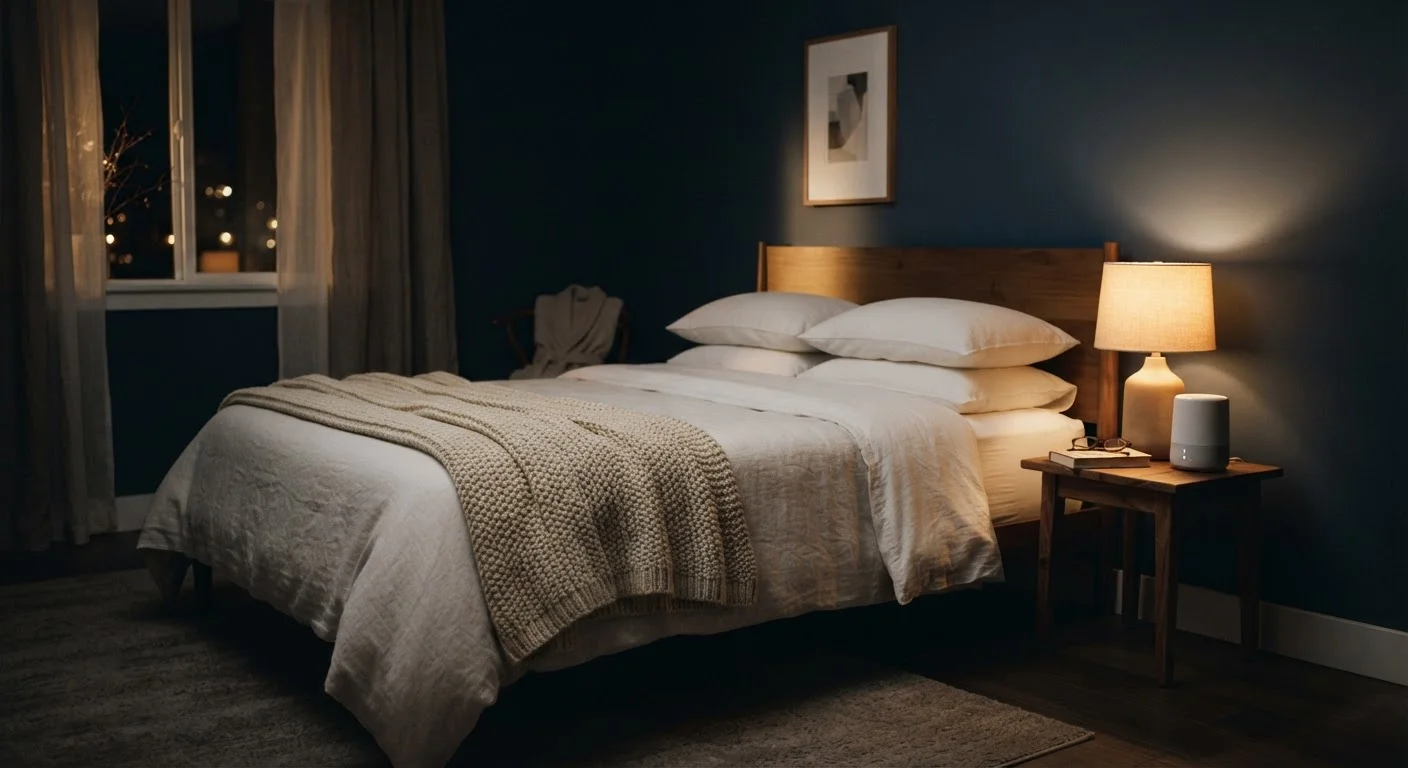
Photo: FeaturingHealth.net | Healthy Living Simplified editorial
Key Takeaways
- Weighted blankets use gentle pressure to promote a sense of calm, while white noise machines mask disruptive environmental sounds.
- Research on weighted blankets is promising but still developing; white noise has a somewhat longer track record for environmental sleep disruption.
- Neither tool is a medical treatment — they're sleep hygiene aids that work best alongside consistent sleep habits.
- Your living environment and personal sensory preferences should guide which tool is the better fit.
- Some people find the greatest benefit using both tools together rather than choosing one exclusively.
How Each Tool Works
Weighted blankets typically weigh between 5 and 25 pounds and are designed to distribute gentle, even pressure across the body. This sensation, sometimes called deep pressure stimulation, is thought to influence the autonomic nervous system — nudging the body away from a state of alertness and toward greater calm. Researchers have observed that this type of pressure may be associated with reduced physiological arousal, though the field is still accumulating large-scale clinical evidence.
White noise machines work on an entirely different principle: sound masking. They produce a steady, broadband sound — most often described as a soft hiss or fan-like hum — that raises the ambient noise floor in a room. Because sleep disruption is often triggered not by loudness itself but by the contrast between quiet and a sudden sound, a consistent background tone reduces the jarring difference that would otherwise rouse a sleeping person.
| Criterion | Weighted Blankets | White Noise Machines |
|---|---|---|
| Primary mechanism | Deep pressure stimulation | Auditory sound masking |
| Main benefit | Reduces anxiety and restlessness | Masks disruptive environmental noise |
| Evidence base | Promising, still developing | Moderate, strongest for noisy environments |
| Best environment | Any bedroom; quiet or noisy | Urban, shared-wall, or noisy settings |
| Temperature impact | Adds warmth; may feel hot | No thermal effect |
| Partner impact | Affects only the user | Audible to both partners |
| Special cautions | Not for young children or certain conditions | Keep volume at safe levels |
What the Research Actually Says
Studies on weighted blankets have found self-reported benefits for anxiety and sleep quality, particularly in populations with autism spectrum disorder, ADHD, and generalized anxiety. A frequently cited randomized controlled trial published in the Journal of Clinical Sleep Medicine found that participants using weighted blankets reported lower insomnia severity and reduced fatigue. However, the body of evidence remains modest in size, and most trials are short-term. It is important to interpret these findings as encouraging rather than conclusive.
White noise has been examined in a variety of settings, including neonatal intensive care units and adult sleep laboratories. Some research suggests it can shorten the time it takes to fall asleep and reduce nighttime awakenings in noisy environments. A 2021 review published in Sleep Medicine Reviews noted that while evidence is generally positive for environmental noise masking, variability in study design makes firm conclusions difficult.
~58%
Adults reporting regular sleep difficulties
According to the American Academy of Sleep Medicine, a majority of U.S. adults experience occasional sleep disruption, underscoring the demand for accessible sleep aids.
42%
Reduction in insomnia severity scores
A randomized controlled trial in the Journal of Clinical Sleep Medicine found weighted blanket users reported notable reductions in self-rated insomnia severity compared to a control group.
This article is for informational purposes only and is not a substitute for professional medical advice. If you are experiencing persistent sleep difficulties, please speak with a qualified healthcare provider.
Practical Considerations Before You Choose
Before committing to either aid, it is worth honestly assessing your sleep environment and your own sensory preferences. Ask yourself: Is my bedroom noisy? If disruptive sounds are the primary culprit behind your poor sleep, a white noise machine addresses the root problem directly. If you instead feel keyed-up, anxious, or physically restless when you lie down, the grounding sensation of a weighted blanket may be more relevant.
There are also practical factors to weigh. Weighted blankets are not suitable for everyone — young children, people with respiratory conditions, and those who feel claustrophobic under heavy covers should approach with caution and consult a healthcare provider first. White noise machines, meanwhile, should be kept at a safe volume; sleep researchers generally suggest keeping bedroom sound levels below 65 decibels to avoid any risk of hearing discomfort over time.
A Note on Special Populations
Importantly, neither tool replaces the fundamentals of good sleep hygiene — a consistent sleep schedule, a cool and dark room, and limiting screen exposure before bed. Think of these aids as additions to a solid foundation, not substitutes for one.
The content on this site is for informational purposes only and is not a substitute for professional advice. Always consult a qualified professional for guidance specific to your situation.