
Sleep Stages Decoded: What Actually Happens Each Night

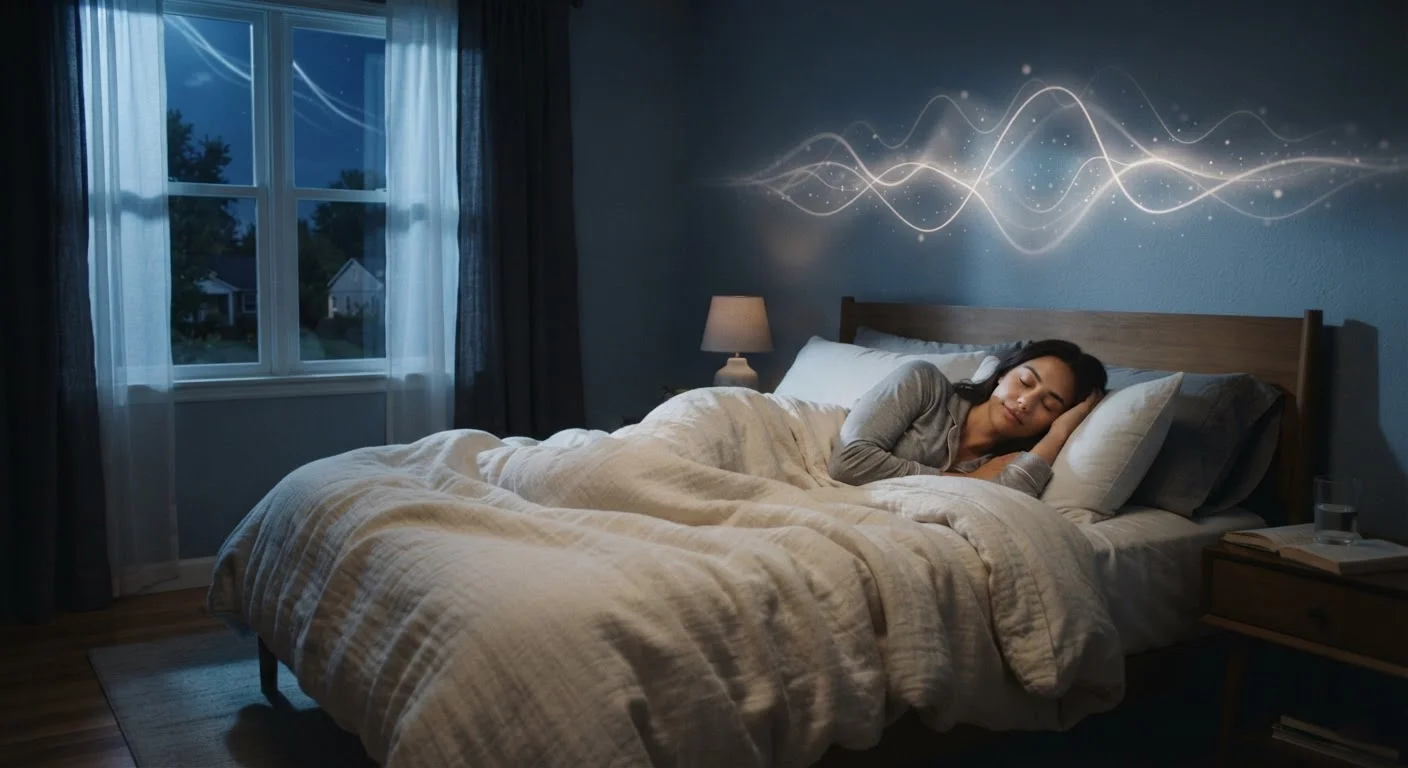
Photo: FeaturingHealth.net | Healthy Living Simplified editorial
The Architecture of a Night's Sleep
Sleep isn't a single, uniform state. From the moment you doze off, your brain moves through a structured sequence of stages, repeating in roughly 90-minute cycles throughout the night. Most adults complete four to six of these cycles, and what happens inside each one has real consequences for memory, mood, immune function, and emotional resilience.
Understanding your sleep architecture — the pattern and proportion of each stage — can help explain why some nights leave you refreshed while others leave you foggy, even when total hours look similar on paper.
| Typical sleep cycle length | ~90 minutes (National Sleep Foundation) |
| Cycles per night (healthy adults) | 4–6 cycles |
| Time spent in NREM sleep | 75–80% of total sleep (American Academy of Sleep Medicine) |
| Time spent in REM sleep | 20–25% of total sleep (American Academy of Sleep Medicine) |
| Deep sleep (N3) peaks | Early in the night |
| REM periods are longest | In the final sleep cycles |
Sleep researchers broadly divide sleep into two categories: NREM (non-rapid eye movement) sleep, which itself has three distinct stages, and REM (rapid eye movement) sleep. Together, they form the foundation of restorative rest. To understand how consistent daily structure supports healthy sleep, it helps to first know what each stage is actually doing.
NREM Sleep: Three Stages, Three Jobs
NREM Stage 1 (N1) is the lightest phase — the transition between wakefulness and sleep. It lasts only a few minutes. Your heartbeat slows, muscles begin to relax, and you may experience brief hypnic jerks (those sudden twitches that can wake you). You're easily roused at this point.
NREM Stage 2 (N2) is where you spend the most total sleep time — roughly 45–55% of the night in healthy adults. Brain activity slows, body temperature drops, and your brain generates distinctive bursts of electrical activity called sleep spindles. Research suggests these spindles play a meaningful role in consolidating procedural memories and motor skills.
NREM Stage 3 (N3), often called deep sleep or slow-wave sleep, is the most physically restorative stage. The brain produces slow, high-amplitude delta waves. Growth hormone is released, tissues are repaired, and the immune system is supported. This is also the stage most disrupted by stress — which is one reason the cortisol-sleep loop can be so damaging over time.
NREM Sleep
Non-rapid eye movement sleep, comprising Stages 1, 2, and 3. It accounts for roughly 75–80% of total sleep time and is especially important for physical restoration and memory consolidation.
REM Sleep
Rapid eye movement sleep, characterized by vivid dreaming, emotional processing, and memory integration. REM periods lengthen across the night and are critical for mental wellness.
Sleep Spindles
Bursts of synchronized neural activity that occur during Stage 2 (N2) NREM sleep. They are associated with memory consolidation and the brain's ability to tune out external stimuli.
Slow-Wave Sleep (SWS)
Another name for NREM Stage 3 (N3), defined by high-amplitude delta brain waves. This is the deepest, most physically restorative stage of sleep.
Sleep Architecture
The overall structure and pattern of sleep stages across a night, including how many cycles occur and how much time is spent in each stage.
Hypnic Jerk
An involuntary muscle twitch that often occurs at the transition into sleep (Stage 1). It is a normal and harmless phenomenon experienced by most people.
REM Sleep: Memory, Emotion, and the Dreaming Brain
REM sleep typically first appears about 90 minutes after falling asleep. As the night progresses, REM periods grow longer — the final cycle before waking may include 30–60 minutes of REM. Your eyes move rapidly beneath closed lids, your breathing becomes irregular, and most voluntary muscles are temporarily paralyzed (a protective mechanism that prevents you from acting out dreams).
This stage is central to emotional processing and creativity. During REM, the brain replays and integrates experiences, helping regulate mood and emotional reactivity. Chronic REM deprivation has been linked in research to increased anxiety and difficulty managing stress responses.
For a deeper look at what happens neurologically during this restorative work, see the science behind how sleep repairs your brain.
20–25%
Of total sleep time spent in REM
According to the American Academy of Sleep Medicine, REM sleep occupies roughly one-fifth of a typical night's rest in healthy adults.
~90 min
Average length of one full sleep cycle
Each NREM–REM cycle lasts roughly 90 minutes, with most adults completing four to six cycles per night.
Stage 3
Stage most disrupted by chronic stress
Research consistently shows elevated cortisol from chronic stress reduces time spent in slow-wave (N3) deep sleep.
This article is for informational purposes only and is not a substitute for professional medical advice. If you have concerns about your sleep health, please consult a qualified healthcare provider.
The content on this site is for informational purposes only and is not a substitute for professional advice. Always consult a qualified professional for guidance specific to your situation.