
Mindfulness and Emotional Resilience: What the Connection Looks Like

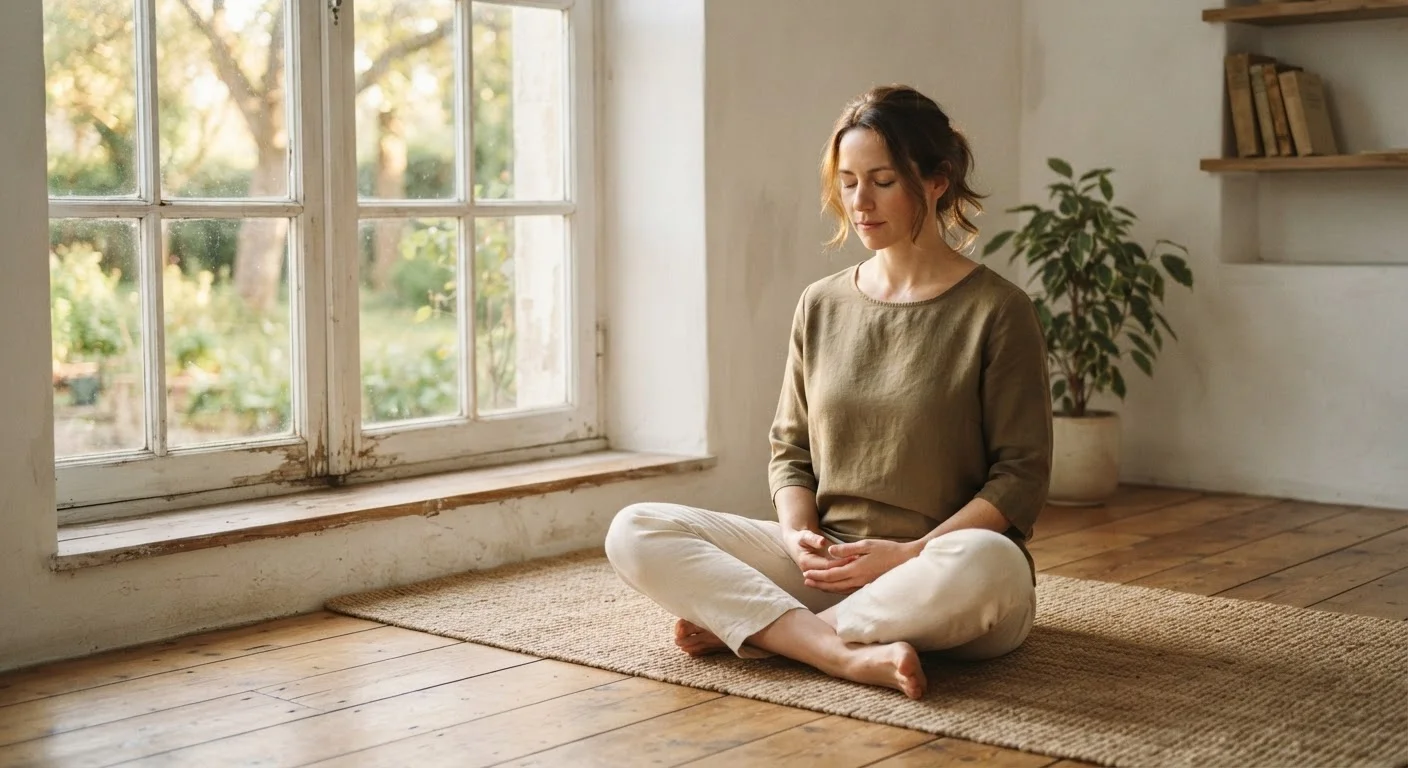
Photo: FeaturingHealth.net | Healthy Living Simplified editorial
Key Takeaways
- Mindfulness trains attention and awareness, two skills that support emotional regulation.
- Resilience is a learnable capacity, not a fixed personality trait you either have or don't.
- Short, consistent mindfulness practice may be more effective than occasional long sessions.
- Sleep and stress management habits compound the benefits of a mindfulness routine.
- Emotional steadiness doesn't mean suppressing feelings — it means responding rather than reacting.
What Mindfulness Actually Does to Emotional Responses
Mindfulness, at its core, is the practice of intentionally paying attention to the present moment — thoughts, physical sensations, and surroundings — without immediately judging or acting on what you notice. This sounds deceptively simple, but its effect on emotional responses is meaningful.
When stress arrives, the brain's threat-detection system can trigger rapid emotional reactions before rational thinking has a chance to engage. Regular mindfulness practice is thought to strengthen the circuitry that allows a brief pause between that emotional trigger and your response. In practical terms, that pause is where resilience lives.
Emotional resilience doesn't mean feeling less — it means having more capacity to stay present with difficult feelings rather than being swept away by them. For a broader foundation on building this into daily life, see our complete overview of mindfulness as a daily practice.
“Between stimulus and response there is a space. In that space is our power to choose our response. In our response lies our growth and our freedom.”
— Viktor E. Frankl, Psychiatrist and author of 'Man's Search for Meaning'
Why Consistency Matters More Than Duration
Many adults assume that mindfulness requires long, uninterrupted sessions to produce real benefits. Behavioral science suggests otherwise. Shorter, more frequent moments of deliberate attention — what some researchers call "micro-practices" — may offer more sustainable gains for people navigating full schedules.
Even two to five minutes of focused breathing, a brief body scan, or a single moment of grounded sensory awareness can signal to the nervous system that there is no immediate threat. Over time, these small resets accumulate.
Try anchoring mindfulness to daily transitions
It's also worth recognizing that emotional resilience doesn't exist in a vacuum. Your sleep quality shapes how reactive your emotions are the following day — and how much mental bandwidth you have to practice any skill at all. If sleep feels like a missing piece, the connection between rest and emotional steadiness is worth exploring in our piece on why emotional resilience starts the night before.
8 weeks
Minimum duration studied in mindfulness-based stress reduction
Many foundational studies on MBSR — a structured mindfulness program — used eight-week protocols to measure changes in stress and emotional regulation.
~10 min/day
Average daily practice in short-form mindfulness research
Several peer-reviewed studies examining brief mindfulness interventions have used daily sessions of around 10 minutes, finding meaningful effects on self-reported stress and emotional awareness.
Building a Realistic Mindfulness Habit
Starting small is not settling — it's strategy. Researchers who study habit formation consistently find that behaviors attached to existing routines are more likely to stick. Try linking a mindfulness moment to something you already do: the first sip of morning coffee, a pause before opening your laptop, or the transition from work to home.
As the practice becomes familiar, you may notice a gradual shift not in the absence of stress, but in how you relate to it. Difficult conversations feel slightly less destabilizing. Minor frustrations pass more quickly. That is resilience showing up — not dramatically, but usefully.
Understanding your own stress patterns is part of this process too. The way you typically cope — whether by addressing the source of stress or processing the emotion itself — shapes which mindfulness approaches will feel most natural. Our article on problem-focused vs. emotion-focused coping can help you identify your instincts and work with them.
This article is for informational purposes only and does not constitute medical or psychological advice. If you are experiencing significant emotional distress or mental health concerns, please consult a qualified healthcare or mental health professional.
Frequently Asked Questions
The content on this site is for informational purposes only and is not a substitute for professional advice. Always consult a qualified professional for guidance specific to your situation.