
Building an Evening Wind-Down Routine Around Mindfulness

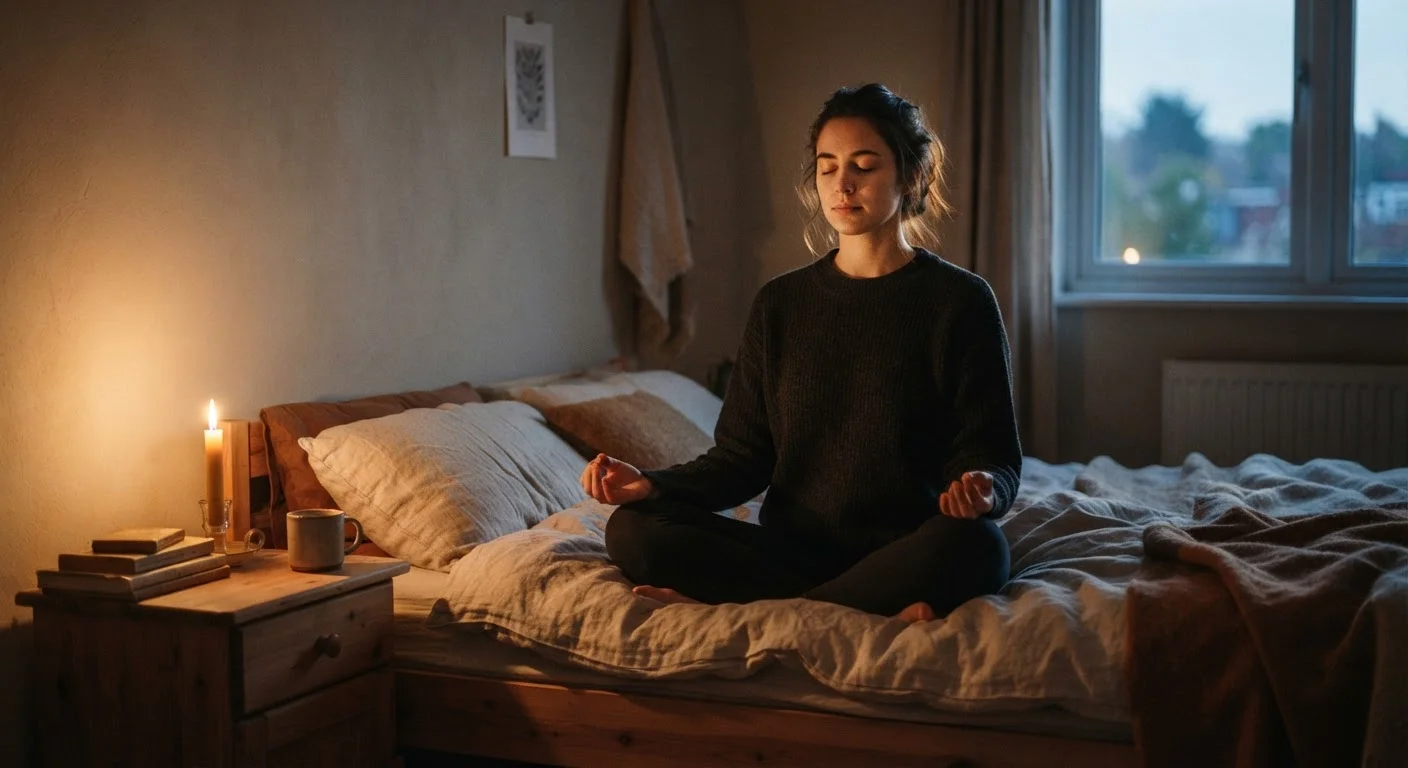
Photo: FeaturingHealth.net | Healthy Living Simplified editorial
Key Takeaways
- A short, consistent evening routine helps your nervous system transition from activity to rest.
- Mindfulness practices like body scans and slow breathing can meaningfully reduce pre-sleep mental chatter.
- You don't need an hour — even 15 focused minutes can shift your physiological state.
- Consistency matters more than perfection; missing one night doesn't derail the habit.
- Dimming lights and limiting screens reinforces the mindfulness-based signals you're building.
Why Your Evening Transition Matters
Most adults move directly from stimulating activity — work emails, news, social media — to attempting sleep, with nothing in between. The brain doesn't switch off like a light; it needs a genuine deceleration period. Without one, the cognitive and physiological arousal built up through the day bleeds into the bedroom, making it harder to fall asleep and easier to lie there rehearsing tomorrow's worries.
A mindfulness-based wind-down routine addresses this by deliberately activating the body's parasympathetic nervous system — the biological counterpart to the stress response. Rather than requiring a personality overhaul or a significant time commitment, it works through short, repeatable cues that accumulate into a reliable signal for your brain: the day is finished, rest is safe.
If you're newer to mindfulness practice in general, our complete overview of mindfulness as a daily practice offers helpful context before you begin. And if your schedule feels genuinely packed, starting a mindfulness habit when you have almost no time shows how to build the skill in very small increments.
This Is Not a Substitute for Clinical Care
What You'll Need Before You Start
The materials for this routine are minimal by design — the whole point is accessibility. Review the list below and gather what applies to you.
What you will need
Timer (phone or dedicated device)
Keeps each mindfulness practice bounded so you aren't checking the clock.
Journal or notebook
Used for a brief brain-dump to offload lingering thoughts before sleep.
Dim lamp or candle
Reducing ambient light signals the brain to begin melatonin production, reinforcing your wind-down cues.
Guided meditation app or audio
Provides structure for body-scan or breathing exercises if you prefer audio guidance over silent practice.
Once you have these in place, the steps below take you through a complete 15–30 minute routine you can begin tonight.
Your Step-by-Step Wind-Down Routine
Follow these steps in order. The sequence is intentional: each step prepares the nervous system for the next. On nights when time is short, prioritize steps 4 and 5.
Set a consistent start time
Choose a time to begin your wind-down — ideally 30 to 60 minutes before you want to be asleep — and protect it as non-negotiable. Consistency trains your brain to associate that time with deceleration, making the transition easier each night. Even on busy evenings, starting at the same point matters more than the length of the routine.
Dim your environment and limit screens
Lower overhead lights or switch to a lamp, and put your phone face-down or in another room. Bright blue-spectrum light suppresses melatonin; dimming the space reinforces the physiological message your mindfulness practice will send. If you need to check something on a device, do it before this step begins — not after.
Do a two-minute brain dump
Grab your journal and spend two minutes writing down anything still competing for your attention — tomorrow's tasks, unresolved conversations, stray worries. The goal isn't to solve these things; it's to externalize them so your mind isn't rehearsing them on loop. Research in cognitive behavioral approaches to insomnia suggests that offloading open mental loops before bed can shorten the time it takes to fall asleep.
Practice slow, deliberate breathing
Sit comfortably and begin a simple breathing exercise. A widely studied pattern is a slow inhale through the nose (count of 4), a brief hold (count of 2), and a longer exhale through the mouth (count of 6). The extended exhale activates the parasympathetic nervous system — the body's rest-and-digest mode. Aim for five to eight breath cycles. This is the anchor of your mindfulness routine and takes under three minutes.
Run a brief body scan
Starting at your feet and slowly moving attention upward to your head, notice any area of physical tension without trying to fix it. Simply observe — tight shoulders, a clenched jaw, a heavy chest — and take one slow breath directed toward that area. This practice, rooted in mindfulness-based stress reduction (MBSR) principles, trains the skill of non-judgmental awareness while simultaneously promoting muscular release. Five to eight minutes is sufficient.
Close with a brief moment of gratitude or intention
Spend sixty seconds mentally noting one or two things from the day that went reasonably well — however small. This isn't toxic positivity; it's a deliberate redirect of attention away from rumination. Emerging research on positive affect suggests that brief gratitude reflections can help moderate the negativity bias that keeps many people awake. Then set a simple intention for tomorrow — one word or phrase is enough — and let the day be done.
Short Routines Stick Better Than Long Ones
Consistency Outweighs Perfection Every Time
For a broader look at how this routine fits into a full evening structure — including lighting, temperature, and other sleep-hygiene elements — see what to do in the hour before bed and building a wind-down routine that actually sticks.
This article is for informational purposes only and does not constitute medical advice. If you have concerns about sleep, anxiety, or mental health, please consult a qualified healthcare professional.
The content on this site is for informational purposes only and is not a substitute for professional advice. Always consult a qualified professional for guidance specific to your situation.