
Your Complete Guide to Building Healthy Daily Routines

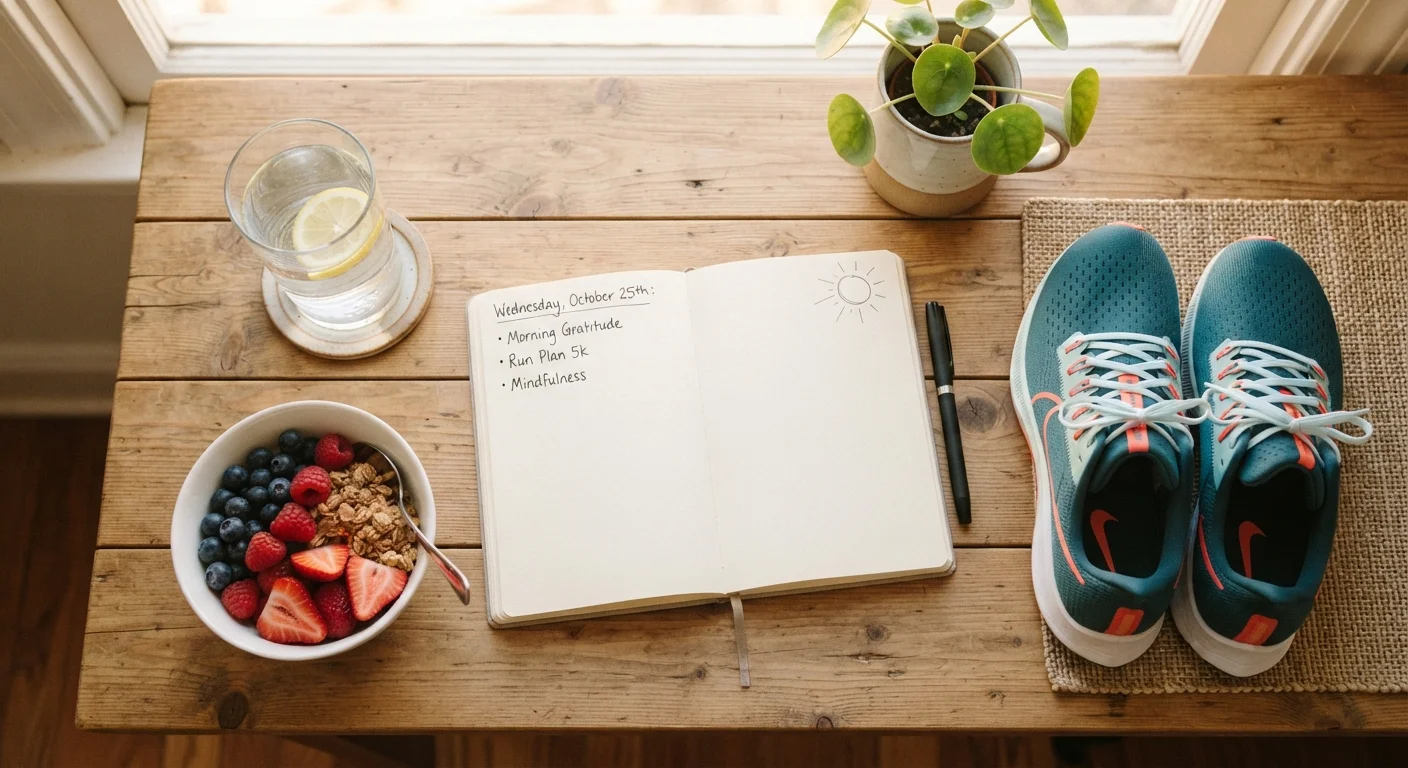
Photo: FeaturingHealth.net | Healthy Living Simplified editorial
Key Takeaways
- Consistent daily routines reduce decision fatigue and support both mental and physical health.
- Habit formation works through cue-routine-reward loops that can be intentionally designed.
- Start with one or two anchored habits before layering in additional changes.
- Both overly rigid and entirely unstructured days carry health trade-offs.
- Regular review and small adjustments keep routines sustainable long-term.
Why Daily Structure Matters for Health
A well-designed daily routine does more than keep you organized — it actively supports your body and mind. Research in behavioral science consistently links predictable daily patterns to lower perceived stress, improved sleep quality, and better adherence to health-promoting behaviors like exercise and balanced eating.
Structure reduces decision fatigue — the mental drain that comes from making too many choices throughout the day. When key behaviors are habitual, your brain expends less energy executing them, freeing up cognitive resources for work, relationships, and creativity. This is why many health-focused professionals describe their routines not as constraints, but as foundations.
It's equally worth acknowledging that hyper-rigid schedules carry their own risks. See our balanced look at structured days for a nuanced exploration of when daily structure helps — and when it can tip into stress or rigidity.
40%
Of daily behaviors are habitual
A Duke University study estimated that roughly 40% of people's daily actions are habits rather than deliberate decisions.
66 days
Average time to form a new habit
Research published in the European Journal of Social Psychology found it took an average of 66 days for a new behavior to become automatic.
7–9 hrs
Recommended adult sleep duration
The American Academy of Sleep Medicine recommends 7–9 hours of nightly sleep for most adults to support optimal health.
The Science of Habit Formation
Understanding how habits form is the most practical tool you have for building lasting routines. According to widely cited habit research, behaviors follow a three-part loop: a cue (a trigger that initiates the behavior), a routine (the behavior itself), and a reward (the outcome that reinforces repetition). Over time, this loop becomes automatic.
The key implication: you can engineer your own habits by deliberately setting cues and attaching meaningful rewards. For example, placing your water bottle on your nightstand (cue) prompts you to hydrate first thing in the morning (routine), which creates a sense of energy and accomplishment (reward).
For a deeper look at the evidence behind this process, explore the Habit Formation hub, which covers the science of building and sustaining daily habits.
Pair a new habit with a strongly established one — for example, doing two minutes of deep breathing immediately after brushing your teeth. The existing habit acts as a reliable cue.
Track your habits visually using a simple paper calendar or checklist. Seeing an unbroken chain of check marks creates a motivational pull that keeps you consistent.
Building Your Routine: Morning to Evening
Effective routines span the full day. Rather than overhauling everything at once, anchor new habits to existing ones — a technique behavioral researchers call habit stacking.
Morning
Morning sets the physiological and psychological tone for your day. Prioritize a consistent wake time, brief movement or stretching, and a nutritious breakfast. Our step-by-step morning routine guide walks through exactly how to structure this window without overhauling your schedule.
Midday
Use the midday block to protect energy. A short walk, a balanced lunch, and even a 5–10 minute mindfulness pause can counteract the cognitive dip many people experience in the early afternoon. Explore mindfulness as a daily practice for practical ways to weave awareness into any part of your day.
Evening
Wind-down habits signal to your nervous system that rest is approaching. Dimming lights, limiting screens, and keeping a consistent sleep time are among the most evidence-backed practices for improving sleep quality and recovery. Consistent healthy eating habits in the evening — such as avoiding large meals close to bedtime — also support rest.
Start Small and Stack Gradually
Common Pitfalls and How to Avoid Them
Even well-intentioned routines fail when common mistakes go unaddressed. Here are the most frequent obstacles and straightforward ways around them:
- Overloading from the start: Trying to change six habits simultaneously overwhelms your willpower. Begin with one or two changes, then layer in more once those feel automatic.
- Perfectionism: Missing a day does not erase your progress. Research suggests that occasional lapses have minimal impact on long-term habit formation when you return to the behavior promptly.
- Ignoring energy rhythms: Scheduling demanding tasks during your natural low-energy periods undermines follow-through. Align effort-intensive habits with your peak alertness windows.
- No built-in flexibility: Life is unpredictable. Build a simplified "minimum viable routine" for disrupted days so the habit loop survives travel, illness, or unexpected demands.
Avoid Treating Routines as All-or-Nothing
Adjusting Your Routine Over Time
A healthy routine is not static. Seasons change, work demands shift, and your body's needs evolve. Scheduling a brief monthly review — even 10 minutes with a journal — helps you identify what's working, what's lapsed, and what needs updating.
During a review, ask yourself three simple questions: Which habits are consistently happening? Which are frequently skipped, and why? Is there a new health priority I want to introduce? This reflective practice keeps your routine genuinely useful rather than aspirational but abandoned.
Remember that this article provides general health information and educational guidance only — it is not a substitute for advice from a qualified healthcare professional. If you have specific health conditions or concerns, consult your doctor before making significant changes to your daily routine.
This article is for informational purposes only and does not constitute medical advice. Always consult a qualified healthcare professional for personal health decisions.
Routines Look Different for Everyone
The content on this site is for informational purposes only and is not a substitute for professional advice. Always consult a qualified professional for guidance specific to your situation.